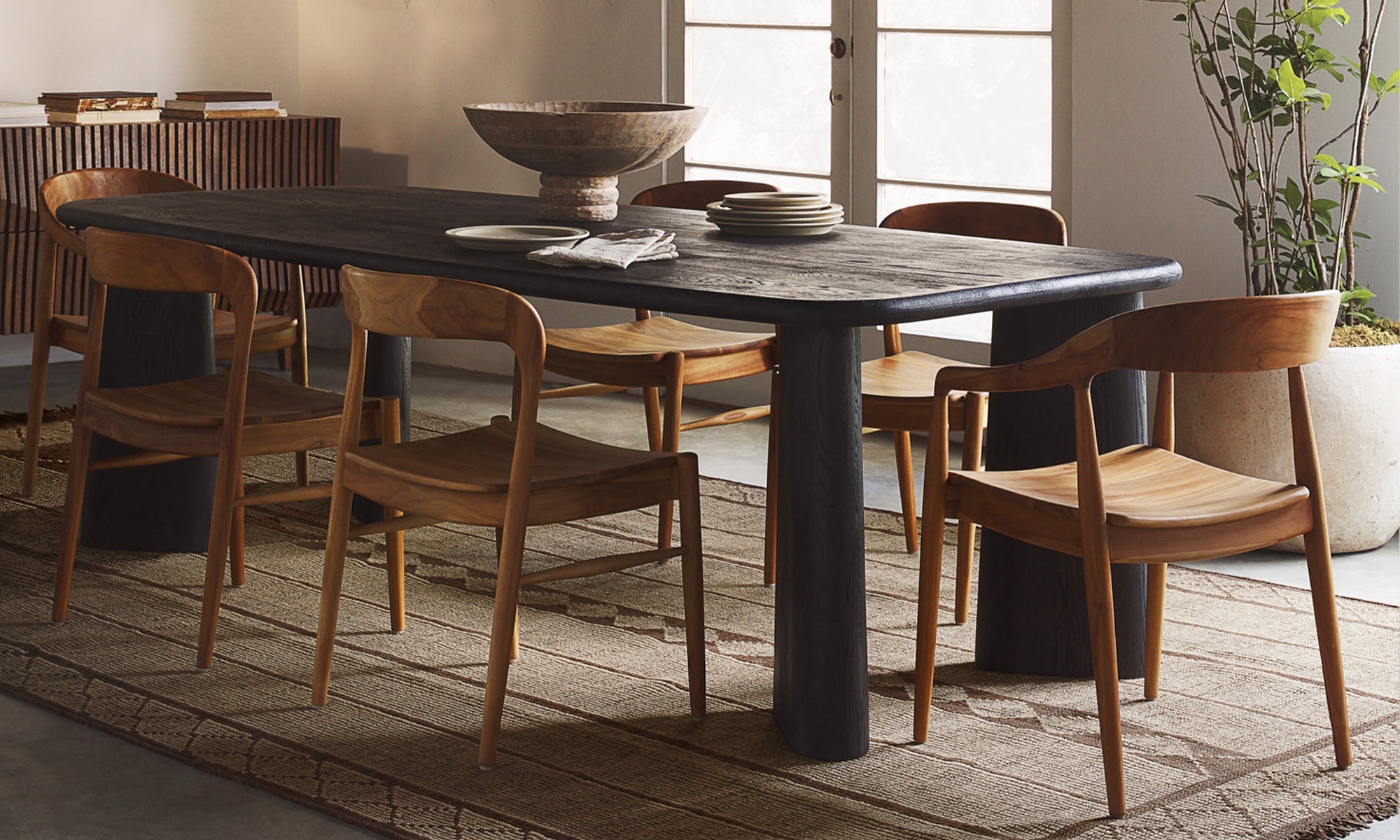
Dark finishes, an abundance of texture, and natural materials ground the Moody and Organic dining room with a raw yet elevated look — a space where the rich... Read More
Dark finishes, an abundance of texture, and natural materials ground the Moody and Organic dining room with a raw yet elevated look — a space where the richness comes from material quality rather than ornament. Dark wood, blackened metal, and raw-edge stone or ceramic surfaces introduce the moody palette, while visible texture in the rug, upholstery, and accent objects prevents the darkness from reading as cold. The overall effect is dramatic without being theatrical: a room that earns its depth from genuine material consideration.
What defines the Moody and Organic dining room aesthetic?
The collection pairs dark-finished dining furniture — a table in dark wood, blackened oak, or ebonized finish — with dining seating in natural materials or dark upholstery. An organic element (a live-edge table, a hand-thrown ceramic accent, a woven rug with visible construction) introduces the organic dimension that keeps the moodiness grounded in nature rather than drama. Overhead lighting in an organic or industrial form ties the look together. The palette stays within dark brown, black, warm charcoal, and natural fiber tones throughout.
How do I balance dark furniture with organic materials in a dining room?
Use the organic materials as the room's warmth counterweight to the dark furniture. A jute or sisal rug beneath a dark dining table adds natural warmth at the floor. Linen or organic-cotton chair upholstery softens the visual weight of dark frame materials. Ceramic pendant lighting in a warm-toned glaze provides warm light that flatters the wood tones rather than washing them out. Plants — particularly sculptural varieties like fig trees or monstera — add organic irregularity that no object or textile can replicate, and provide the green counterpoint that moody, warm-dark rooms often benefit from.
What dining table materials work best for a moody, organic look?
Dark-stained or naturally dark hardwoods (walnut, ebonized oak, dark ash) have the most authentic connection to the moody organic aesthetic — they read as serious and material-rich without the synthetic quality of lacquered or painted surfaces. Live-edge tables in any wood species add the organic irregularity that characterizes the look at its most specific. Stone-top tables in dark slate, dark marble, or soapstone reinforce the palette and introduce a different material quality that contrasts productively with wood seating and textile elements.
Also explore: Dining Tables | Dining Chairs | Dining Room Rugs | Chandeliers | New Arrivals
Show Less